The empty saddles / Hourses
Horses
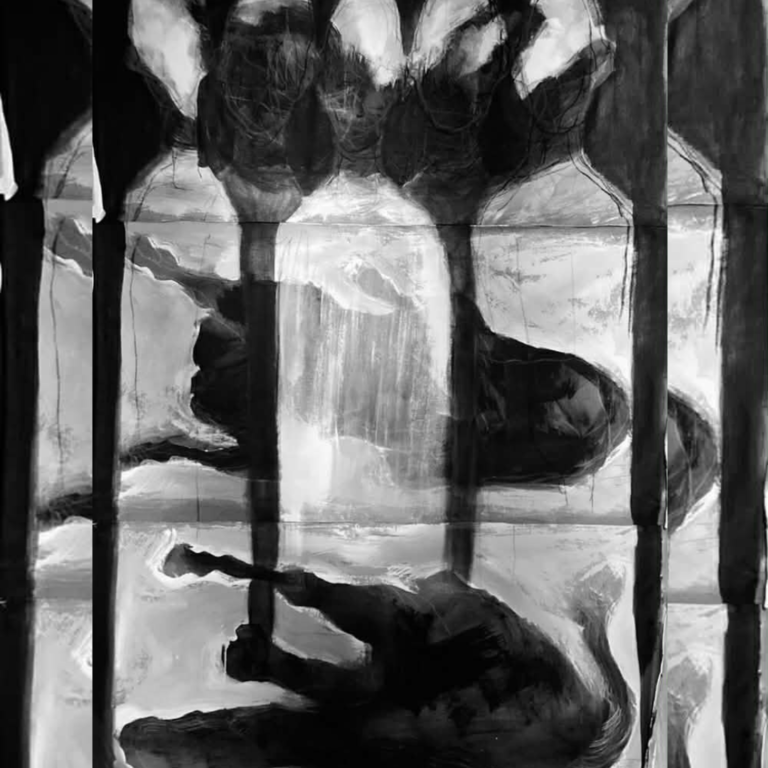
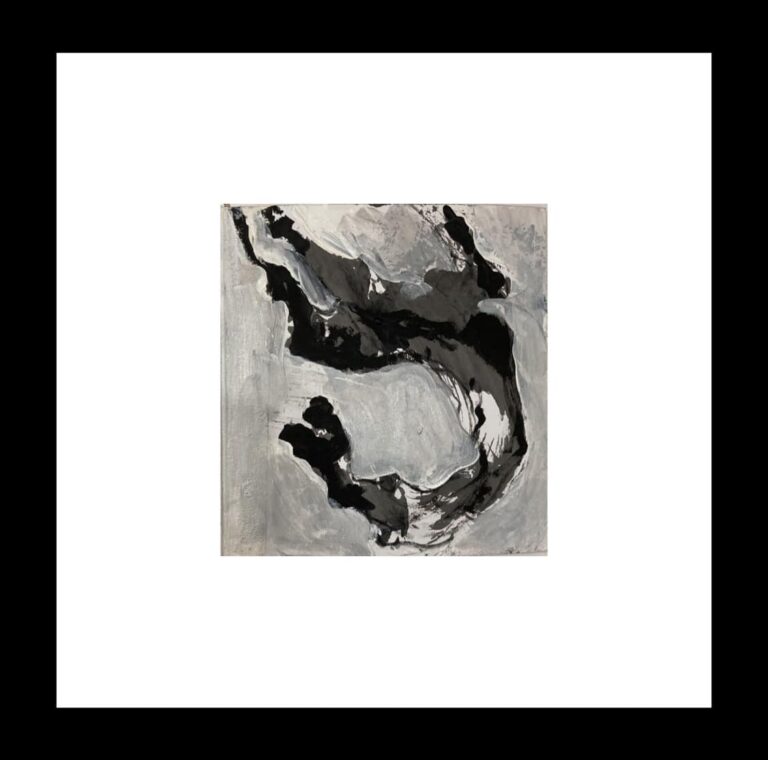
At the Battle
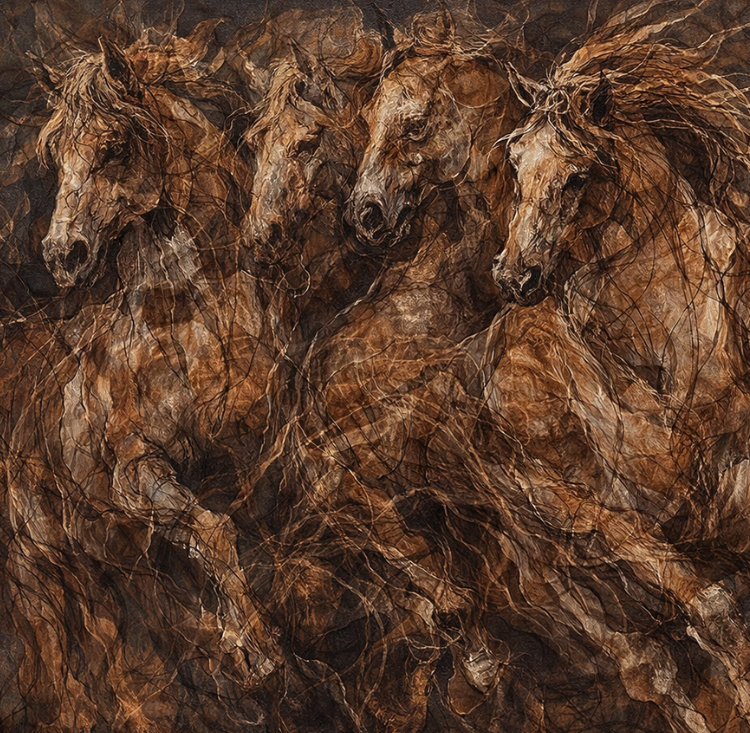
Horses in this Paintings represents Strength, swiftness, majestic beauty, dedication and at the same time — sensitivity and vulnerability… What an amazing creature! Horses are one of the first objects of fine art, depicted in cave paintings, and used in numerous sculptures. Horses have been considered sacred animals from ancient times. They are associated with fertility and connected with omens, sorcerers and pagan deities. Many people drew inspiration from the external beauty of these animals, but they also felt something else — the element of freedom hidden under the mane.
Just as simplicity and depth met in the work, it also met with lightness and weight in terms of the contrast that gives the work its uniqueness. The work is made up of layers of paper that make the work light compared to other materials, but the first look makes the recipient delude that the work represents a sculptural body of heavy solid materials, and a source Conjecture is the mastery of the details and the shape in which the sculpture is placed, and the shape of its balanced sitting that suggests weight.
The triumph of perfection and freedom of the spirit a horse has always been an indicator of its owner’s wealth and power. This animal is a hero of military battles and sport competitions. The image of a horse on canvas is intended to tell the viewer about the power, occupation, even the success of any person, and sometimes it could be…. in such cases: “Different century — different horses”. Also we can see in some paintings another animals such as mules and goats which also symbolizes strength and victory
This evocative painting, a key piece in the project ‘The Battle’, explores conflict not as a distant clash, but as an experience that hits home. The composition centers on a group of houses—simplified, geometric structures that provide a stark point of stability amidst chaotic and expressive brushwork. Swirls of deep indigos and moody grays clash with surprising bursts of bright, fiery colors, transforming the domestic scene into a poignant visual metaphor for resilience. It is a powerful study of how people, symbolized by their homes, navigate and endure within a broader environment of disruption.
In this striking piece from “The Battle,” the artist moves away from the traditional imagery of war to focus on the home as the central site of resilience. The composition features a cluster of houses, rendered as simplified, block-like forms that stand grounded amidst a turbulent, expressive atmosphere.
Thick, gestural strokes of charcoal and deep indigo suggest the smoke and shadows of struggle, while sudden bursts of warm ochre and pale light represent the enduring spirit of the inhabitants within. By abstracting the architecture of the neighborhood, the work transforms a local scene into a universal symbol of endurance, illustrating the quiet “battle” to preserve one’s home and identity in the face of external disruption.
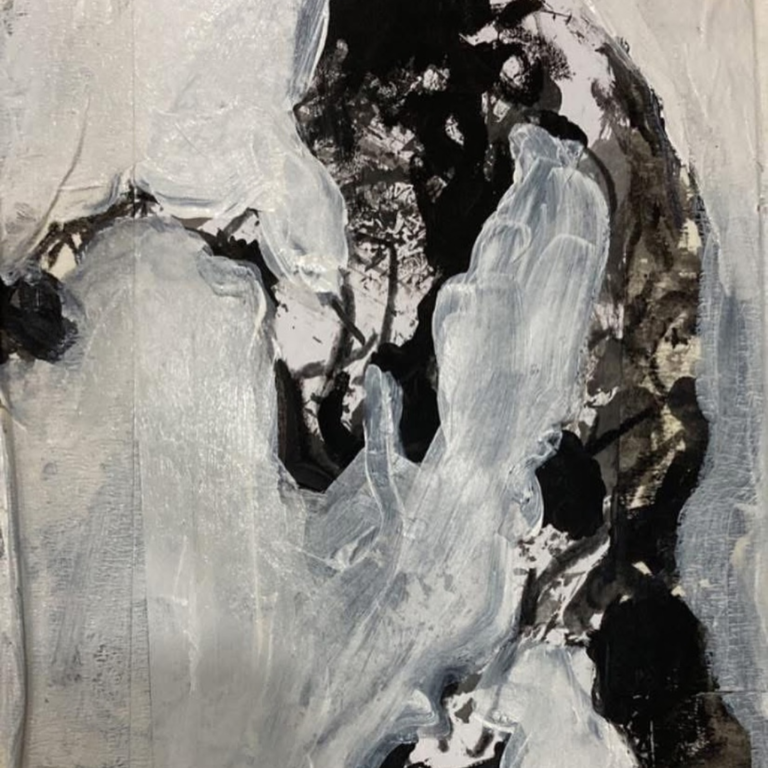
This work employs an aggressive, high-contrast palette to explore the fragility of domestic stability during times of upheaval. The “horses” ; they are spectral shapes emerging from a chaotic, monochromatic storm.
Azizieh uses thick, gestural applications of white acrylic—reminiscent of falling debris or a blinding fog—to partially obscure the dark, skeletal structures beneath. The raw energy of the brushwork suggests a landscape in a state of sudden transformation. By stripping away color, the artist emphasizes the stark reality of the “battle,” focusing on the interplay between solid structures and the fluid, unpredictable forces that threaten to wash them away. It is a haunting reflection on the vulnerability of our most sacred spaces.
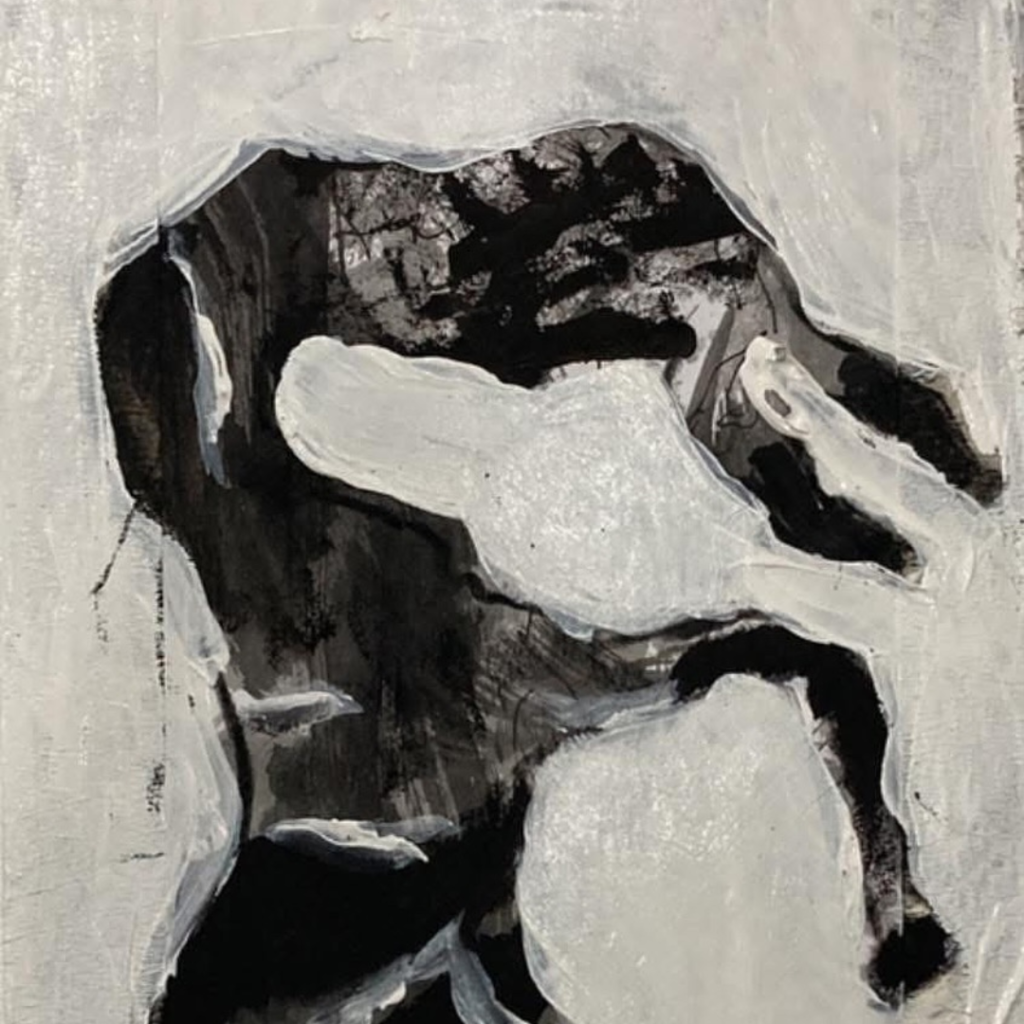
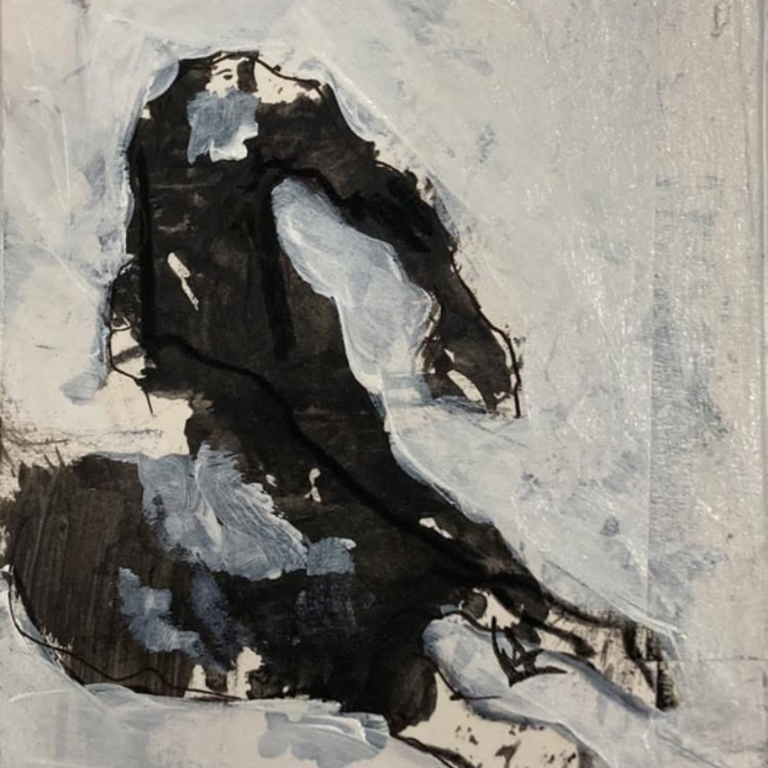
This piece from “The Battle” project is perhaps the most raw and visceral in the series. It moves away from the collective experience to focus on the singular, agonizing cry of a soul in turmoil.
The Silent Scream
From the Project: “The Battle”
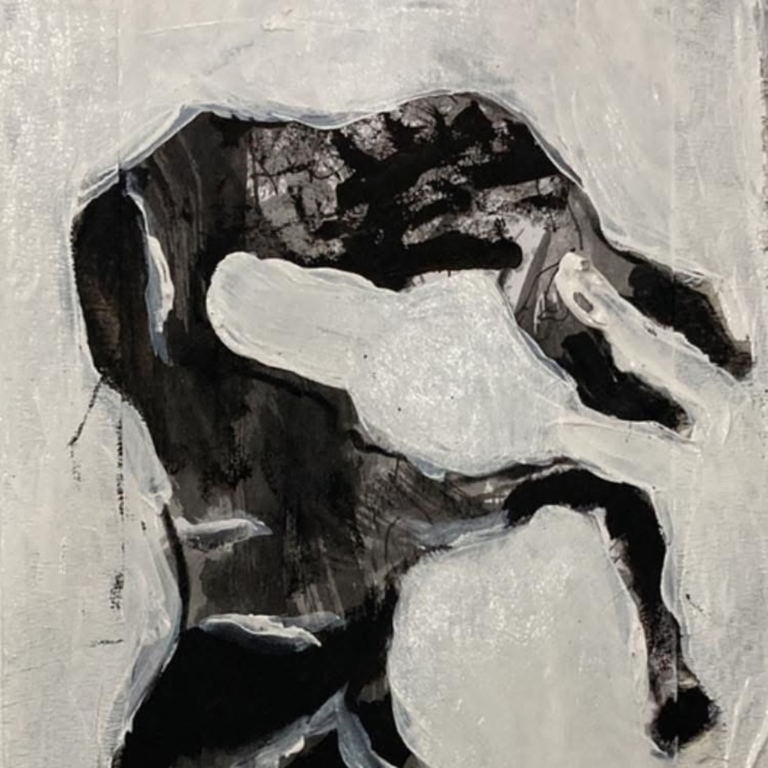
This painting is a jagged, monochromatic ache captured on canvas. Stripped of the comfort of color, it reveals the skeletal remains of hope. The central form—twisted and reaching—resembles a creature or a spirit caught in a moment of pure, unadulterated release. It is the visual equivalent of a scream that no one hears, a silent upheaval of the spirit against the cold, gray walls of an indifferent world.
The aggressive, black strokes cut through the pale, textured background like scars on a memory. There is a profound sense of “breaking” here—of a structure, a body, or a home finally giving way to the pressure of the struggle. It is not just a depiction of a battle; it is the feeling of the battle itself—the jagged edges, the desperate reach for air, and the stark, lonely beauty of surviving when everything else has been stripped away. It is an intimate portrait of resilience born from total exhaustion.
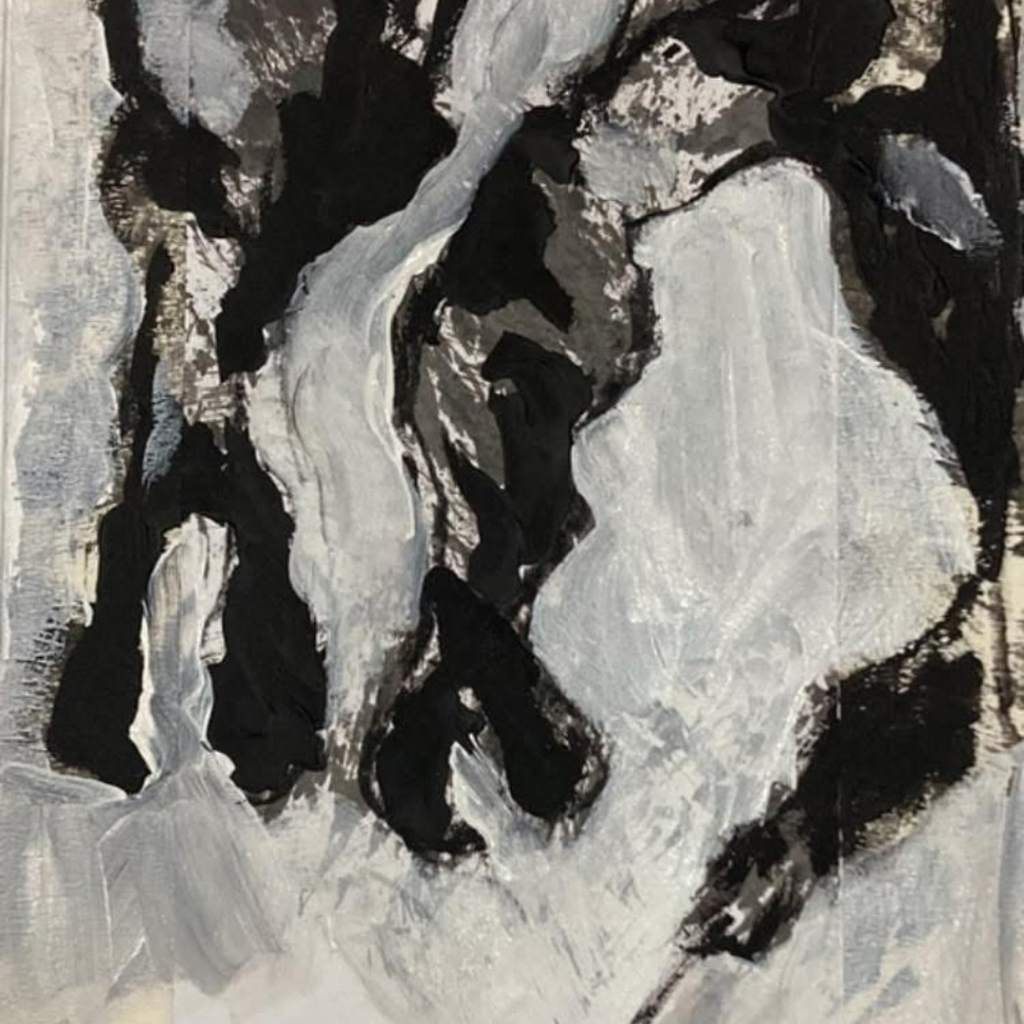
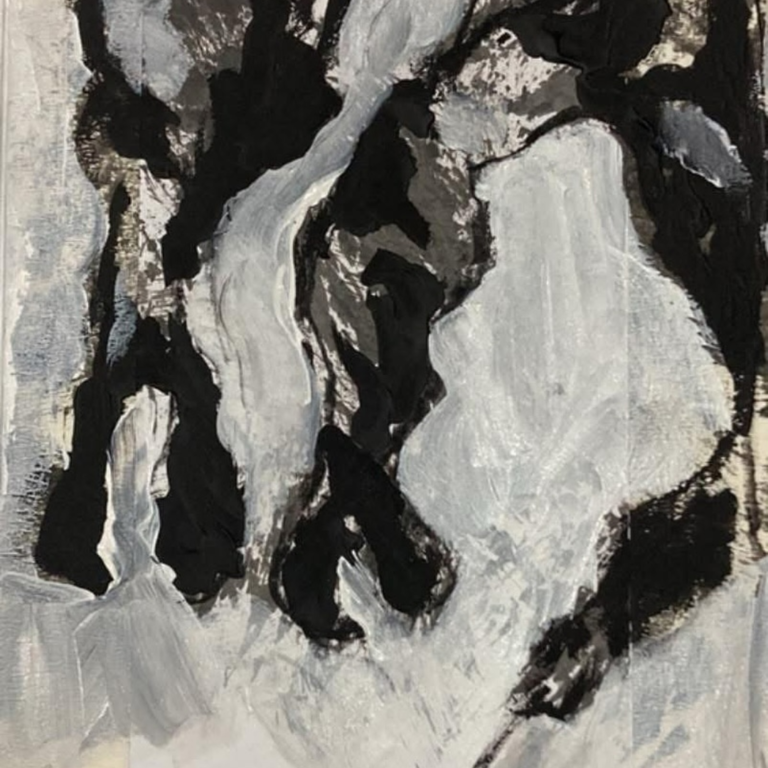
This work utilizes a stark, monochromatic language to capture the structural “fracturing” caused by conflict. Within the aggressive layering of black and white, the faint silhouettes of houses appear almost as ghosts, pinned beneath heavy, textured brushstrokes.
The artist employs a visceral “scuffing” technique, where white acrylic is dragged over dark under-layers to create a sense of movement, debris, or a sudden, blinding shift in perspective. By abstracting the neighborhood into jagged shapes and deep shadows, Azizieh creates a space that feels both claustrophobic and expansive—a visual testament to the resilience of the home as it stands firm against a storm of transformation.
The Weight of the Burden
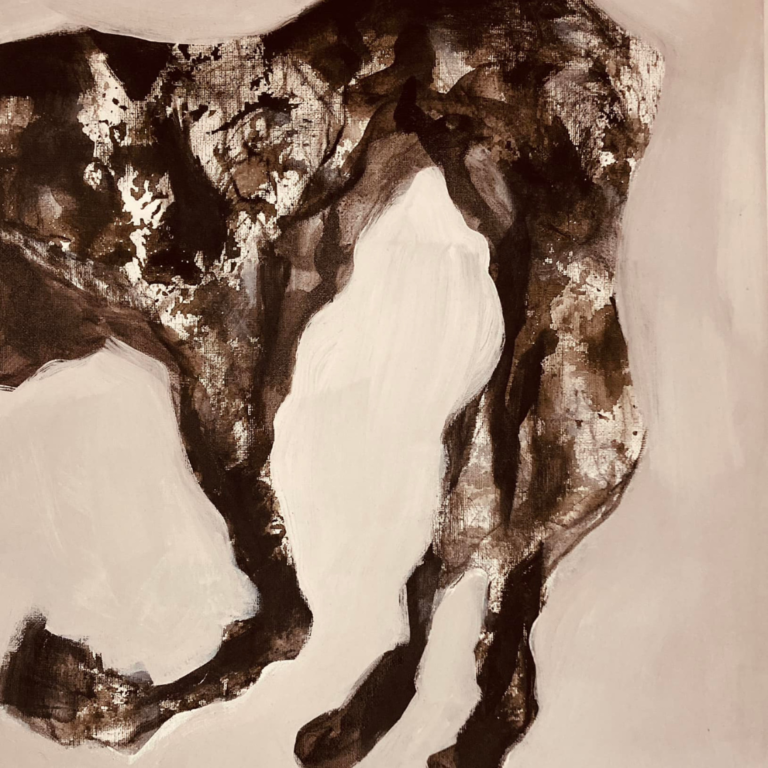
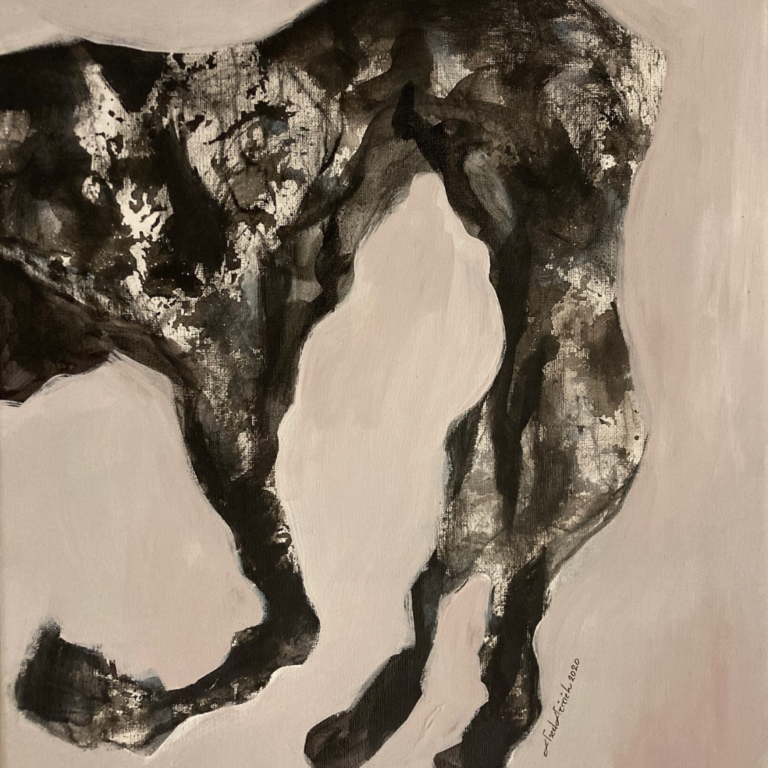
In this piece, the “battle” is internal and physical. Azizieh focuses on the raw, muscular tension of a singular form—reminiscent of the hindquarters of a powerful beast of burden or a figure stooped under immense pressure. By removing the environment and focusing on the silhouette, the artist highlights the sheer strength required to endure.
The textured, ink-like blacks are applied with a “distressed” technique, revealing a marbled, cellular detail within the form that suggests both age and wear. Set against a stark, neutral background, the work captures a moment of heavy stillness—the quiet pause in the middle of a struggle where strength and exhaustion meet.
The Reach of the Weary
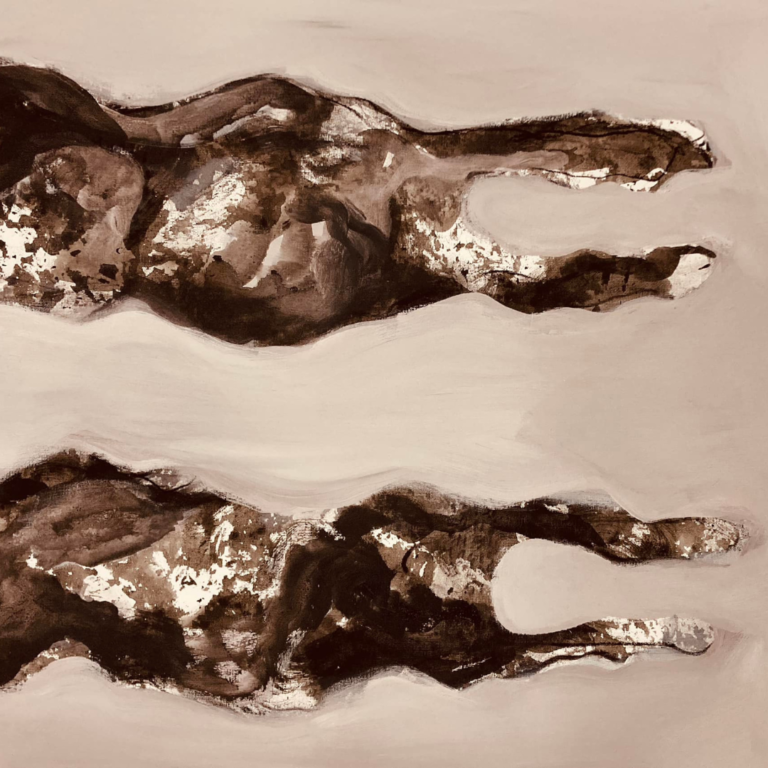
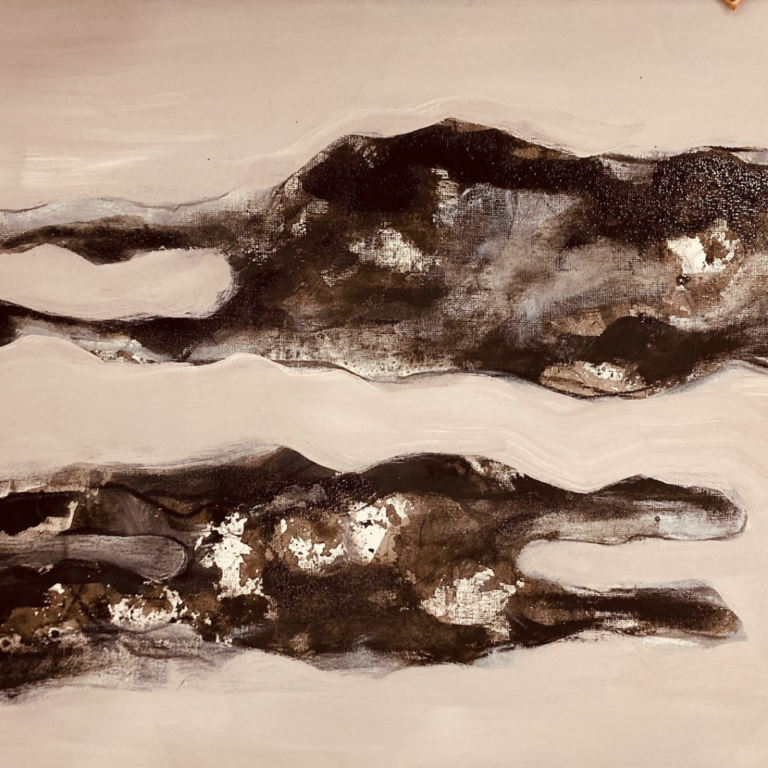
This work explores the “battle” through a lens of profound physical and emotional fatigue. Two elongated, horizontal forms stretch across the canvas like shadows of fallen giants or hands reaching through a fog. Set against a stark, off-white background, these dark, anatomical abstractions are rendered with a distressed, marbled texture that speaks to a life heavily weathered by experience.
The parallel placement of the forms creates a sense of collective suffering and shared destiny. By stripping away all environmental context, Azizieh focuses entirely on the gesture of the forms—a visual representation of the moment when strength is depleted, yet the spirit continues to reach out from the silence.
Echoes of the Earth
This work presents a dual, horizontal composition that feels like a cross-section of memory. The forms resemble weathered bones or ancient fossils—anatomical remnants of a struggle that has reached its conclusion. By utilizing a high-contrast, “corroded” texture, Azizieh suggests that the battle has left an indelible mark on the very substance of the subjects.
The two parallel forms act as a rhythmic pulse across the canvas, balanced against a soft, neutral void. It is a visual meditation on what remains when the noise of conflict fades: the core structures of strength, the resilience of the skeleton, and the quiet dignity of a form that has been broken and reformed by its history. This piece serves as a silent, powerful testament to the “battle” as a permanent, transformative journey.
Pillars of the Past
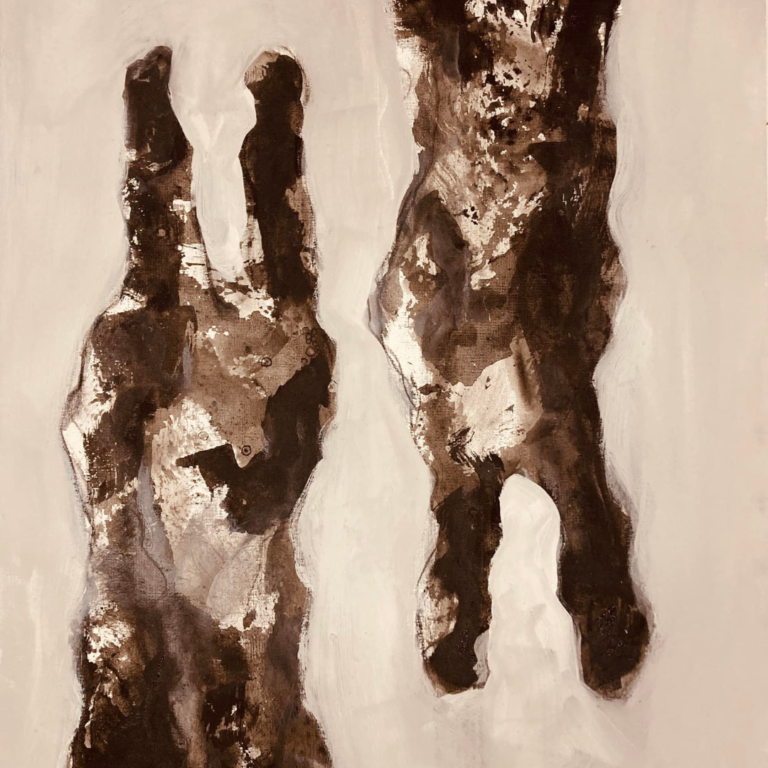
In this commanding work, two vertical, monolithic forms rise like ancient ruins against a pale, ethereal background. These “pillars” represent the core of human resilience—what remains standing when the dust of the battle settles. By orienting the forms vertically, Azizieh suggests a defiance against gravity and a refusal to be broken.
The texture within the dark pigments is particularly intricate here; a marbled, “cracked” effect mimics the surface of weathered stone or scorched earth, symbolizing the deep-seated history etched into the subjects’ very foundation. The stark contrast and minimalist composition transform these abstract anatomical shapes into universal icons of endurance, standing as silent sentinels that bridge the gap between memory and survival.
The Battle – Abstract Horses
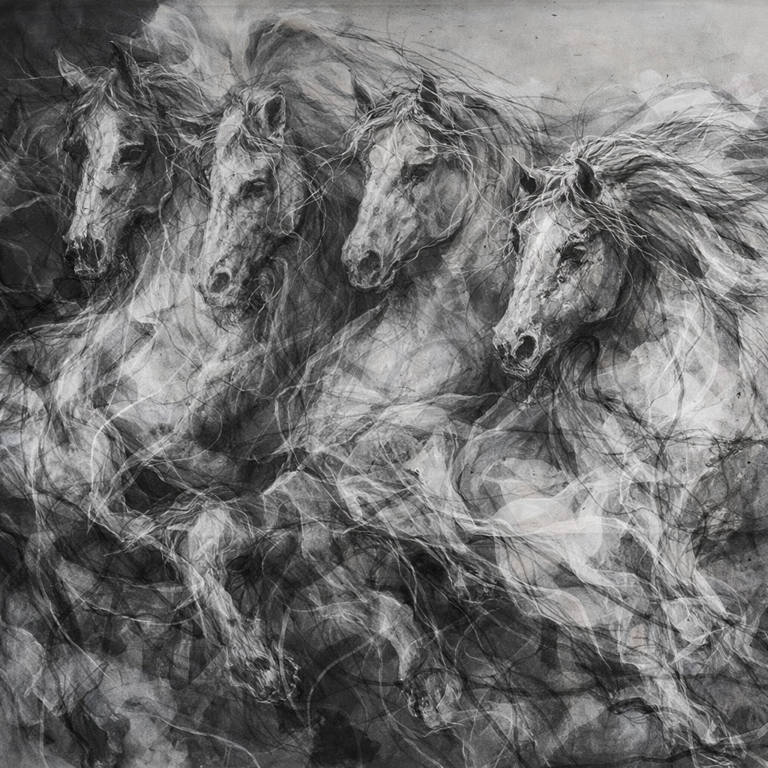
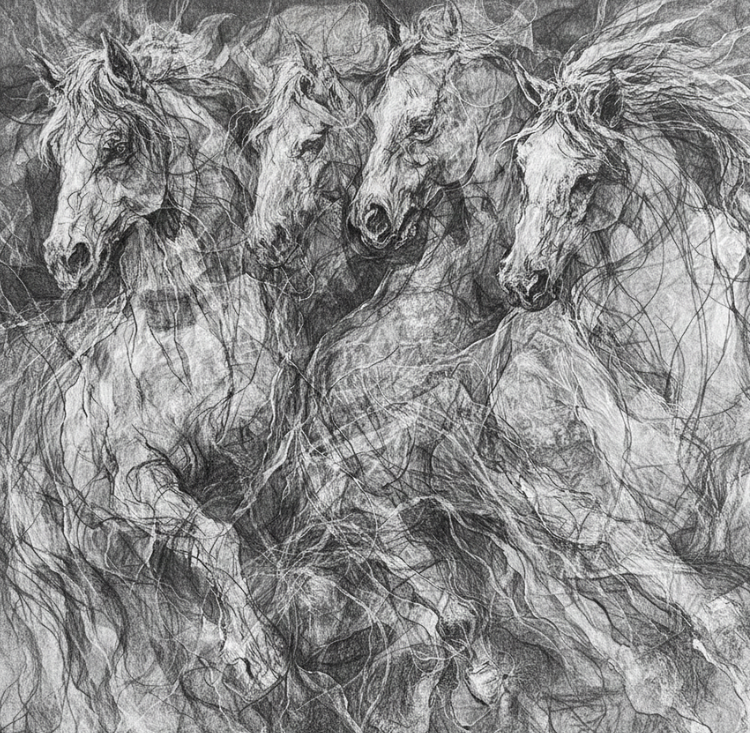
In this work, the horse is stripped of its literal form and reimagined as a surge of pure momentum. These are not merely animals; they are the “engines” of the battle—symbols of frantic energy, power, and the terrifying beauty of a force that cannot be contained.
Azizieh uses an aggressive, gestural technique where the anatomy of the horses dissolves into a whirlwind of charcoal lines and sweeping white highlights. The overlapping silhouettes create a sense of a stampede, a collective rush toward an unknown horizon. The “noise” of the brushwork mimics the thundering of hooves and the dust of upheaval, capturing that precise moment where strength and chaos become one. It is a tribute to the spirit’s drive to move forward, even when the path is obscured by the smoke of the struggle.
The Battle – Abstract Horses
The painting is a visceral explosion of kinetic energy. By dissolving traditional anatomy into a whirlwind of charcoal lines and sweeping white highlights, the work captures the chaotic “noise” of a stampede. The overlapping silhouettes create the sensation of a collective rush toward an unknown horizon, mirroring the spirit’s primal drive to move forward even when the path is obscured by the smoke of struggle.
Visual Dynamics
-
Kinetic Abstraction: Sweeping diagonal and circular lines create a sense of constant, thundering motion that pulls the viewer into the heart of the rush.
-
Skeletal Light: Sharp white highlights act as the structural “bones” of the movement, cutting through the dark, atmospheric background like flashes of clarity in a storm.
-
The Power of the Collective: Individual forms blur into a single, unstoppable wave, representing a unified force of resilience and survival.
The Battle – Echoes of the Charge
In this expansive composition, the horse is reimagined as a rhythmic force of nature. Rather than focusing on a single animal, Azizieh presents a frieze-like procession of abstract equine forms that seem to dissolve into the very air they breathe. The horses are rendered with skeletal, ghost-like outlines, suggesting they are memories of power—echoes of a charge that has passed or is yet to come.
The artist uses a sophisticated grayscale palette, where smoky charcoals and soft silvers overlap to create a sense of deep, atmospheric fog. The gestural brushstrokes and intentional “blurring” of the silhouettes evoke the dust and haze of the battlefield, transforming the scene into a haunting meditation on movement, history, and the enduring strength of the pack. It is a visual representation of the momentum required to carry on through the thickest parts of the struggle.